

By Tunde Olawuwo
As the shadows of the 2027 general elections lengthen across the political landscape, a familiar and grim playbook has begun to re-emerge.
Across communities nationwide, the nation’s vibrant youth demographic faces the perennial threat of exploitation—targeted as convenient foot soldiers for political violence, digital hostility, and physical intimidation.
Yet, far from the rancor of campaign headquarters and divisive rallies, a powerful counter-narrative unfurled across the weekend.
In a striking display of civic discipline and collective resolve, thousands of young Nigerian men took to the streets across 17 states, including a massive turnout in Ibadan.
There were no stones thrown, no political billboards torn down, and no chants of division.
Instead, the streets echoed with the rhythmic hum of bicycle tires.
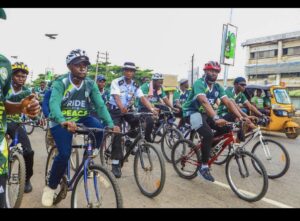
Pedaling under the banner of the “Ride for Peace”—an initiative pioneered by the Majlis Khuddam-ul-Ahmadiyya Nigeria (MKAN), the Ahmadiyya Muslim Youth Organisation—these riders delivered a singular message for the looming election cycle: the strength of the youth belongs to nation-building, not destruction.
Carrying the poignant theme, “One Decade. One Ride. One People. One Peace,” the nationwide mobilization sought to reframe the national conversation about youth agency.
For years, critics have lamented a society where youthful energy is too often funneled into tearing down the very communities these generations will one day inherit.
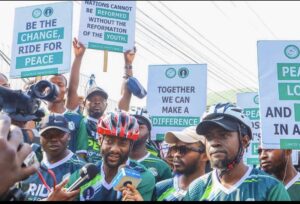
MKAN’s leadership maintains a foundational philosophy that nations cannot be reformed without the moral and civic reformation of the youth.
Over the past decade, that creed has translated into tangible grassroots action—ranging from nationwide peace rides and massive tree-planting campaigns to the “Stop the Crime” initiative, regular blood donations, and sponsored free medical surgeries.
For many observers, the movement’s enduring anchor remains its defining mantra: “Love for All, Hatred for None.” The weekend’s rides brought together current organizers alongside past leaders who spent years cementing a culture of structured, focused, and disciplined civic participation among Nigerian youth.
Sociologists and civic leaders have long noted that a bicycle serves as a fitting metaphor for national progress.
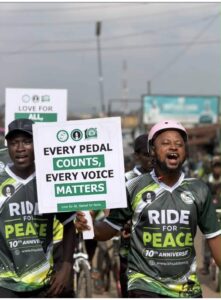
To keep it moving forward, a rider must maintain delicate balance and keep pedaling through resistance; stopping or losing equilibrium results in a fall.
That analogy resonated heavily along the asphalt routes last Sunday, as riders underscored that Nigeria cannot move forward if it loses its balance to religious intolerance, ethnic division, or electoral thuggery.
As the political temperature continues to rise ahead of 2027, the sights and sounds of thousands of young Nigerians choosing two wheels over turmoil offer a compelling blueprint.
If last weekend’s events are any indication, a growing segment of the nation’s youth is signaling that the true metric of a nation’s future lies not in political manifestos, but in the mindset and discipline of the next generation.
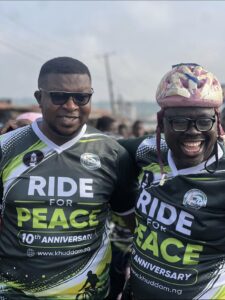
However, the event was attended by prominent and accomplished youth leaders in the state, including Mr. Tunde Olawuwo, the general manager of Splash 105.5 FM and Lagelu 96.7 FM.