

By Milliscent Nnwoka
As Nigeria moves towards the 2027 general elections, a growing number of organisations are finding new ways to collect, analyseand publish election results independently.
But as more platforms enter the results-reporting space, an important question arises: how do we ensure that the figures being published are accurate, verifiable and responsibly communicated to the public?
This was at the heart of a stakeholders’ roundtable convened by Yiaga Africa on independent election results tabulation and publication, bringing together election observers, civil society organisations, media practitioners, political parties, independent tabulation initiatives and regulatory institutions, including the National Broadcasting Commission (NBC) and the Broadcasting Organisations of Nigeria (BON) Nigeria Press Council (NPC) among others.
The meeting provided an opportunity for stakeholders to reflect on the growing role of independent results tabulation in Nigeria’s electoral process and, more importantly, agree on the need for a common Code of Conduct to guide organisations involved in collecting, verifying, aggregating and publishing election results.
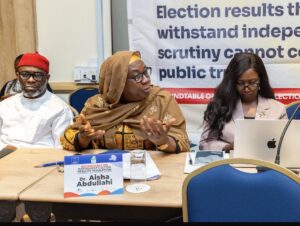
With the 2027 elections approaching, participants recognisedthat while independent tabulation can strengthen transparency and provide an additional layer of accountability, differences in methodology, verification standards and publication practices could also create confusion, particularly when competing figures begin circulating during the sensitive period of results collation.
For Yiaga Africa, the conversation was therefore not about discouraging independent scrutiny.
It was about ensuring that the process is credible, responsible and guided by standards that protect both the integrity of the information and public confidence in the electoral process.
In his remarks, Samson Itodo, Executive Director of YiagaAfrica, underscored the importance of building public confidence in the electoral process as Nigeria prepares for another general election.
Independent results tabulation has become an important part of election observation, offering citizens additional ways to scrutinise election outcomes and assess the credibility of the process.
However, the value of these initiatives ultimately depends on the quality of the information they produce and how responsibly they communicate their findings.
The challenge, therefore, is to ensure that organisations working in this space are guided by common principles, transparent methodologies and reliable verification processes.
A common Code of Conduct would help establish minimum standards for independent tabulation initiatives, strengthen coordination among practitioners and provide citizens with greater assurance that figures being reported have been subjected to credible checks.
It would also help address the risks of inconsistent reporting, premature publication, partisan influence and the circulation of unverified results, which could undermine confidence at a time when accurate information is particularly important.
The INEC Chairman, Professor Joash Ojo Amupitan, SAN, also welcomed the development of a voluntary Code of Conduct, describing it as an opportunity to strengthen transparency, responsible information management and public confidence in election outcomes.
In remarks delivered by INEC’s Director of Information and Communication Technology, Dr Lawrence Bayode, the Chairman acknowledged the contributions of election observers, political parties, media organisations and civil society to electoral accountability.
He noted that independent verification could provide additional assurance to citizens and help identify discrepancies in the electoral process.
However, he cautioned that independently aggregated figures, projections and partial tallies must never be presented as official election results. “Independent verification should complement electoral accountability, not create competing centres of statutory authority,” he stated.
The Chairman stressed that the issue was not whether independent verification should take place, but how it could be conducted within a framework that guarantees accuracy, methodological integrity, responsible communication and respect for the law.
He also outlined six principles that should guide the proposed Code: methodological integrity; accuracy and responsible publication; information integrity; technology and data security; accountability and correction of errors; and stakeholder independence and voluntary compliance.
These principles are particularly important as technology increasingly shapes how election results are collected, processed and communicated.
Why a common Code of Conduct matters
One of the strongest points of convergence at the meeting was the recognition that independent results tabulation cannot operate effectively without shared standards.
Nigeria has seen different approaches to independent election results reporting, including statistically sampled parallel vote tabulation now called PRVT to mean Processing Results Voter Tabulation and Election Results Analysis Dashboard ERAD both by Yiaga Africa, quick counts, aggregation of polling-unit results uploaded to INEC’s Result Viewing Portal (IReV), citizen-generated reports and collaborative verification initiatives.
Each approach has its strengths, but they also come with limitations.
A statistical sample, for instance, produces an estimate within a defined margin of error; an aggregation based on IReV depends on the availability and quality of uploaded result sheets; while crowdsourced information requires authentication before it can be relied upon.
Without clear disclosure of these differences, the public may struggle to understand what the figures represent, how they were obtained and whether they are sufficiently verified.
Participants therefore agreed that a Code of Conduct was necessary to provide a common reference point for organisations undertaking independent tabulation.
It would clarify expectations around data collection, authentication, verification, aggregation, publication and corrections, while preserving the independence of participating organisations.
The Code is also expected to discourage the publication of fabricated or manipulated result sheets, unsupported projections, premature victory declarations and other practices capable of misleading citizens or heightening political tension.
Importantly, it would not transfer INEC’s statutory responsibilities to independent organisations. Rather, it would help ensure that their work contributes meaningfully to electoral transparency without creating competing claims to official authority.
From principles to practice: A technical session on responsible tabulation
Moving beyond the general discussions, the roundtable featured a dedicated technical session on the practical application of the proposed Code and the standards that should guide independent tabulation initiatives.
The session examined what responsible results reporting should look like, from obtaining source documents and authenticating polling-unit results to checking figures, documenting discrepancies and communicating findings to the public.
The technical discussion reinforced the need for independent tabulation organisations to understand their data sources, document their methodologies, disclose coverage gaps and establish clear procedures for correcting errors.
It also highlighted the importance of human verification, technology safeguards, data security and audit trails in ensuring that the figures eventually published can be traced to credible source records.
The participation of media organisations, NPC, NUJ, NBC and BON brought another important dimension to the conversation: the responsibility that comes with communicating election results to millions of Nigerians.
For the media, the challenge is not simply to publish figures as quickly as possible, but to establish where they came from, how they were generated and whether they have been independently verified.
When different organisations publish different figures, journalists must be able to explain the methodologies behind them and distinguish between preliminary findings, independently tabulated results and the official results declared by INEC.
The involvement of print and broadcasting stakeholders also underscored the importance of professional standards in the reporting and dissemination of election information, particularly during periods of heightened political tension.
The proposed Code offers an opportunity to strengthen this relationship by encouraging accurate reporting, responsible amplification and clear communication of the status and limitations of independently generated figures.
As Nigeria approaches the 2027 general elections, the stakes surrounding election information will remain high. Citizens will expect timely and credible information, while political actors, observers and the media will be under pressure to interpret and communicate results as they emerge.
The roundtable was an important step towards ensuring that independent results tabulation initiatives are prepared to meet these expectations.
The agreement on the need for a common Code of Conduct signals a recognition that credibility cannot be built by technology alone.
It requires transparent methods, reliable data, rigorous verification and organisations willing to be accountable for what they publish.
For Yiaga Africa, the task ahead is to sustain the engagement with stakeholders and translate the principles discussed into a practical, voluntary framework that organisations can commit to ahead of the 2027 elections and beyond.
Ultimately, independent tabulation and publication of Election results should help Nigerians better understand and scrutinise their elections, not leave them questioning which figures to believe.
As the 2027 elections draw closer, the message from the roundtable was clear: independent scrutiny is important, matched with accuracy, transparency and responsibility.
Dr. Milliscent Nnwoka is a journalist, communications specialist and information integrity advocate whose work focuses on media literacy, civic engagement and countering disinformation.
She is also programme Manager for Countering Foreign Interference in Elections CFIE and Head Media, Yiaga Africa.